Dog or Cat Vomiting: What to Do and When to Worry
Updated: 5 days ago
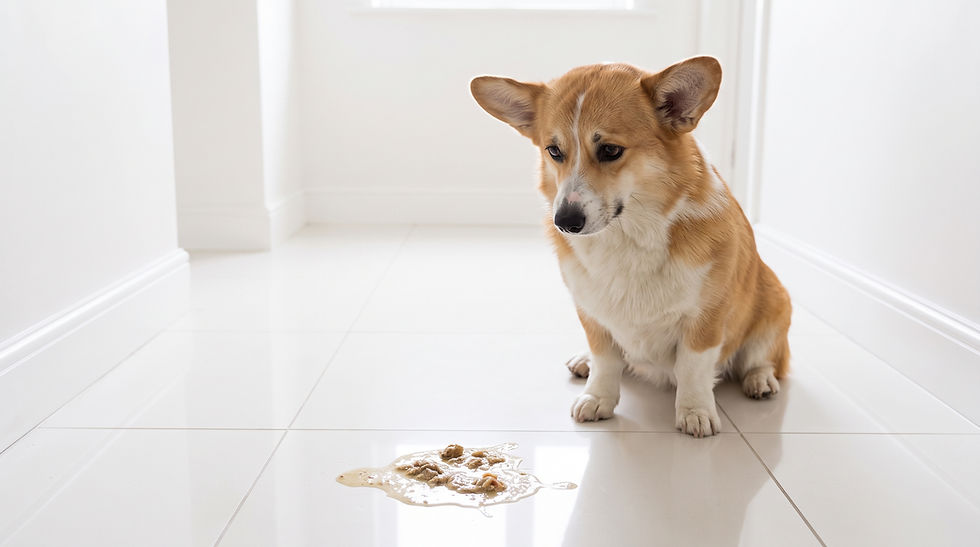
The odd bout of vomiting can happen in dogs and cats — for example after eating too fast. But vomiting can also signal something serious. What matters is how often, what it looks like, and how your pet seems afterwards.
When is it okay to monitor?
If your pet vomits once, then stays active, keeps drinking, and doesn't vomit again, you can usually watch them at home.
Note down these details
This information helps your vet judge how urgent things are:
Frequency: How many times, and since when?
Appearance: Food, yellow fluid (bile), foam, or blood? Take a photo if you can.
Timing: Before or after eating?
Changes: New food, new treats, or a chance they swallowed a foreign object or something toxic?
Energy: Still active, or very weak?
Other symptoms: Any diarrhea too?
What you can do now
Make sure fresh water is available.
Don't give human medicine.
Keep the photo and your notes for the vet.
See a vet right away if
Vomiting more than 3 times in a few hours
Blood in the vomit
Vomiting with severe weakness or unresponsiveness
The belly looks swollen, hard, or painful, or your pet won't let you touch it
Your pet tries to vomit but nothing comes up and the belly is swelling — especially in large, deep-chested dogs, this can be life-threatening bloat (GDV)
They may have swallowed a toxin (chocolate, grapes/raisins, onion, xylitol, human medicine, rat poison) or a foreign object
For poisoning, bloat with unproductive retching, or collapse, don't wait for an appointment — contact us right away or go straight to the nearest 24-hour emergency vet.
Get help at Modernvet
Not sure if your pet's vomiting needs a vet? Message the Modernvet team on WhatsApp — include a photo so we can assess faster — or book an appointment in the Modernvet app.



Comments